
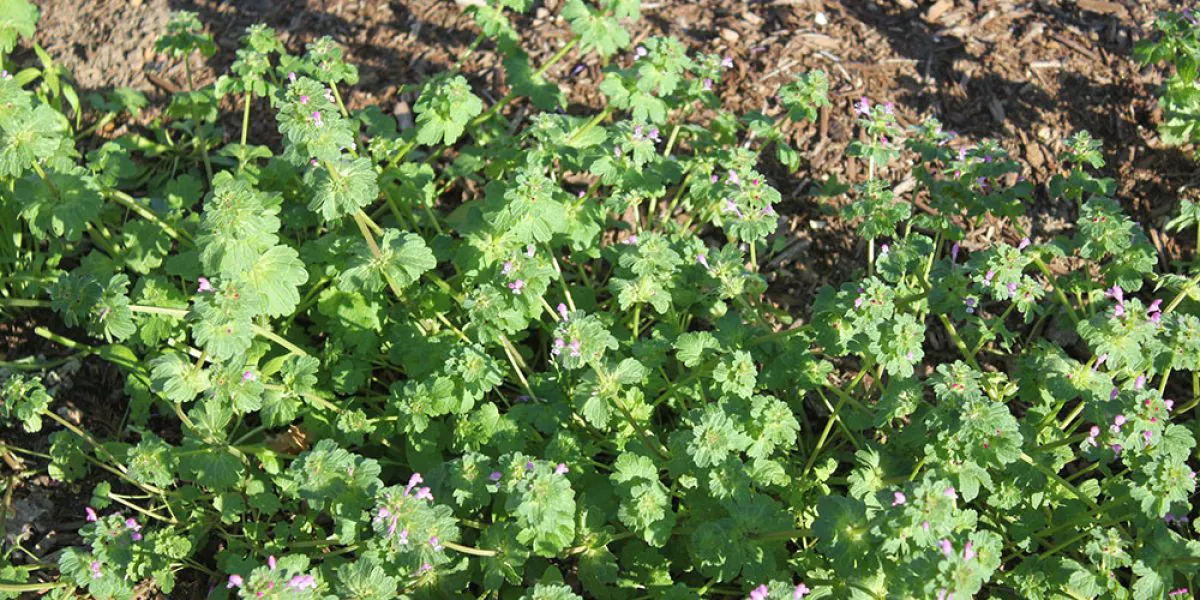
If your lawn feels like it’s losing the battle lately, you’re not alone. Across the region, homeowners are seeing a surge in common weeds in Houston, especially during seasonal transitions. The combination of mild winters, early spring warmth, and inconsistent rainfall creates the perfect environment for weeds to thrive while your grass is still waking up.
Right now, three weeds in particular are making themselves at home in Houston-area lawns: henbit, clover, and nutsedge (also known as nutgrass). Each one behaves a little differently, which means controlling them requires a slightly different approach.
Let’s break down what you’re seeing, why it’s happening, and what you can actually do about it.
Henbit: The Seasonal Takeover You Didn’t See Coming
If you’ve noticed small purple flowers popping up across your lawn, you’re likely dealing with henbit weeds. This is one of the most widespread seasonal invaders and a major reason homeowners start searching for answers this time of year.
Henbit is a winter annual, meaning it germinates in the fall, grows quietly through winter, and then explodes in early spring. By the time you notice it, it’s already well established.
Why henbit spreads so aggressively
Henbit thrives in:
- Thin or patchy turf
- Lawns with poor mowing habits
- Areas with compacted soil
- Yards that skipped fall pre-emergent treatments
Because it grows early in the season, it often beats your grass to sunlight and nutrients, giving it a big advantage.
Why it’s so frustrating
The tricky part about henbit weeds is timing. Once you see the purple blooms, the plant is already mature and actively seeding. That’s why so many homeowners feel like it “appeared overnight.”
How to control henbit
- Apply post-emergent treatments while the plant is still young (late winter to early spring)
- Strengthen your turf density so it has less room to grow
- Plan ahead with a fall pre-emergent application to stop it before it starts
If you’re dealing with a lawn full of purple blooms, the focus now is control—but prevention is what keeps it from coming back next year.
Clover: A Sign Your Lawn Is Struggling
Seeing clover taking over your lawn can be frustrating, especially because it tends to spread in patches that quickly expand.
Clover is a broadleaf weed, but it behaves differently than many others. It has the ability to pull nitrogen from the air and convert it into a usable form, which sounds helpful—but in your lawn, it’s actually a sign that something is off.
Why clover shows up

Clover thrives in lawns that are:
- Low in nitrogen
- Under-fertilized
- Thin or stressed
- Competing poorly with weeds
In other words, clover doesn’t just appear randomly—it takes advantage of weak turf.
Why it spreads so fast
Once established, clover grows low to the ground and spreads outward, crowding out grass. That’s why homeowners often describe it as “taking over.”
How to stop clover
If you’re wondering how to stop clover, the answer isn’t just spraying it—it’s fixing the conditions that allowed it to grow in the first place.
Here’s what works:
- Apply a targeted broadleaf weed treatment
- Increase nitrogen levels with proper fertilization
- Mow at the correct height to encourage thicker turf
- Water deeply but infrequently to promote strong roots
The key is combining weed control with lawn health. If you only treat the clover but don’t strengthen your grass, it’ll likely come right back.
Nutsedge (Nutgrass): The Fast-Growing Intruder
Of the three, nutsedge—often called nutgrass—is easily the most stubborn.
It doesn’t behave like typical weeds, and that’s where a lot of homeowners go wrong. If you’ve ever tried to pull it and noticed it comes back even stronger, you’ve already experienced what makes it so difficult.
How to identify nutsedge

Nutsedge stands out because:
- It grows faster than your grass
- It has a lighter green or yellowish color
- It grows upright rather than blending into the lawn
- It often appears in wetter areas
Why it’s so hard to control
Unlike most weeds, nutgrass spreads through underground tubers (sometimes called “nutlets”). That means pulling it doesn’t remove the source—it just triggers more growth.
What causes nutsedge
Nutsedge thrives in:
- Overwatered lawns
- Poor drainage areas
- Compacted or soggy soil
If parts of your yard stay wet longer than others, that’s usually where nutsedge shows up first.
How to control nutsedge
- Use a specialized treatment designed specifically for sedges
- Avoid overwatering your lawn
- Improve drainage in problem areas
- Be patient—multiple treatments are often required
This isn’t a one-and-done weed. Consistency is key.
Why These Weeds Are Taking Over Right Now
The reason you’re seeing all three at once comes down to timing and environment.
Houston’s climate creates a nearly year-round growing season, but early spring is a perfect storm:
- Winter weeds like henbit are reaching maturity
- Lawns are still thin coming out of dormancy
- Soil conditions vary from dry to overly saturated
- Warm temperatures kick everything into growth mode
That combination gives weeds a head start before your grass has a chance to compete.
When Is the Best Time to Treat Lawn for Weeds?
This is one of the most common—and most important—questions homeowners ask.
When is the best time to treat lawn for weeds?
The honest answer: before you ever see them.
Ideal weed control timing
- Fall: Apply pre-emergent to prevent winter weeds like henbit
- Early spring: Treat actively growing weeds before they mature
- Late spring to summer: Target weeds like nutsedge as they emerge
- Year-round: Maintain proper lawn health to prevent future outbreaks
If you’re only reacting after weeds appear, you’re always going to feel one step behind. A proactive plan makes a huge difference.
The Bigger Picture: Healthy Lawns Resist Weeds
All three of these weeds—henbit, clover, and nutsedge—have something in common: they take advantage of opportunity.
- Henbit thrives when lawns are thin in winter
- Clover shows up when nutrients are lacking
- Nutsedge moves into overly wet or stressed areas
The stronger and thicker your lawn is, the fewer opportunities weeds have to take hold.
That means:
- Consistent fertilization
- Proper mowing practices
- Smart watering habits
- Seasonal weed prevention
When those pieces are in place, weeds don’t stand much of a chance.
Take Back Control of Your Lawn
If your yard is currently covered in henbit weeds, dealing with clover taking over your lawn, or fighting persistent nutsedge, you don’t have to figure it out alone.
At GreenGate Turf & Pest, we understand exactly how common weeds in Houston behave because we deal with them every day. More importantly, we know how to stop them at the source—not just temporarily, but long-term.
Our lawn care programs are designed around Houston’s unique climate, targeting weeds at the right time while strengthening your grass so it can naturally resist future growth.
If you’re ready for a lawn that looks clean, healthy, and under control, now’s the time to act. Reach out today and let’s build a plan that keeps your yard ahead of the weeds—not constantly catching up.